
This week we’ve got an Australia favourite, the Superb Lyrebird.
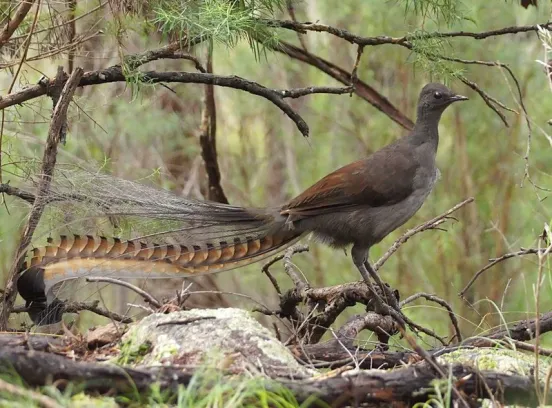
I would say that rarely does a week go by without this little animal appearing in your field of vision. Primarily because it appears on the ten-cent coin.
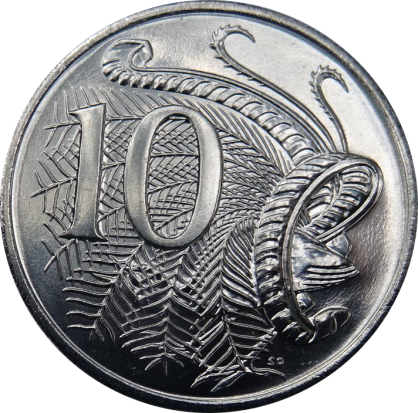
I mean, people still use money, right? That still exists, doesn’t it…?
The lyrebird was given that name because of its striking tail. When specimens were sent to the British Museum in the 1800s, the taxidermists had never seen one before and decided to arrange the feathers in a display similar to that of a peacock. Something like this:
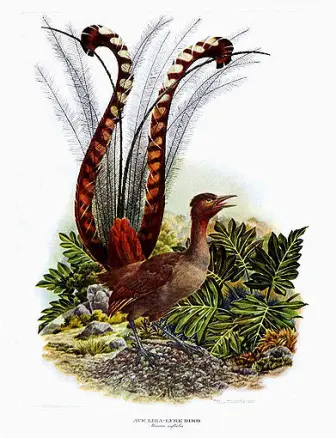
They thought the feathers resembled a lyre (a type of harp), and that’s how it got its name. In real life, the lyrebird never holds its tail in that position (the depiction on the 10-cent coin is more accurate).
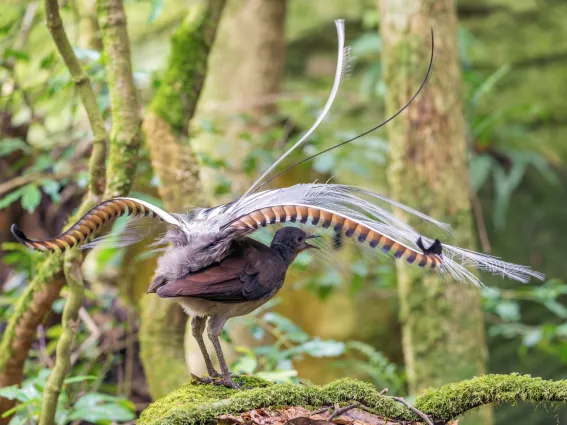
But, of course, lyrebirds are also famous for their ability to mimic other sounds. They can reproduce the songs of most other birds, as well as artificial noises such as camera shutters, alarms, and chainsaws. So, while the lyrebird doesn’t have much to do with lyres, its ability to imitate other sounds makes it, in a way, a deceptive bird.
And with that, I say goodbye.
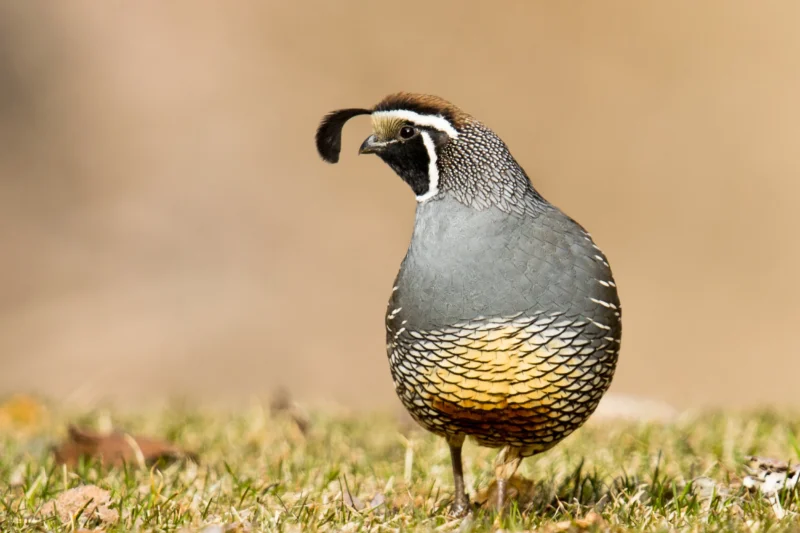
Read More:Meet the California Quail