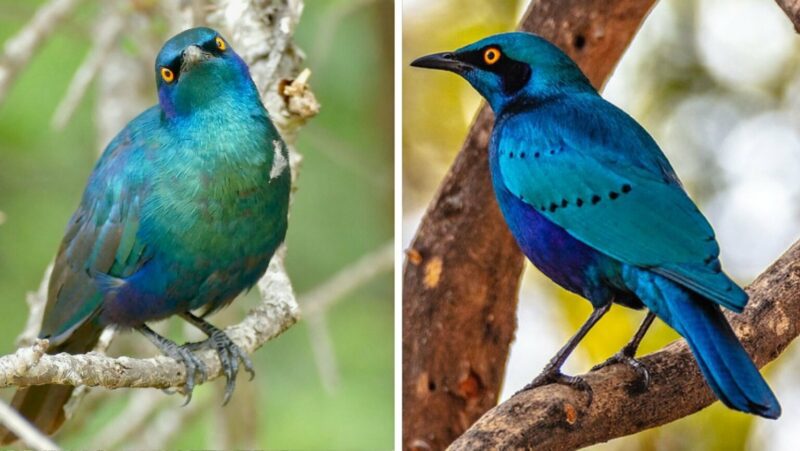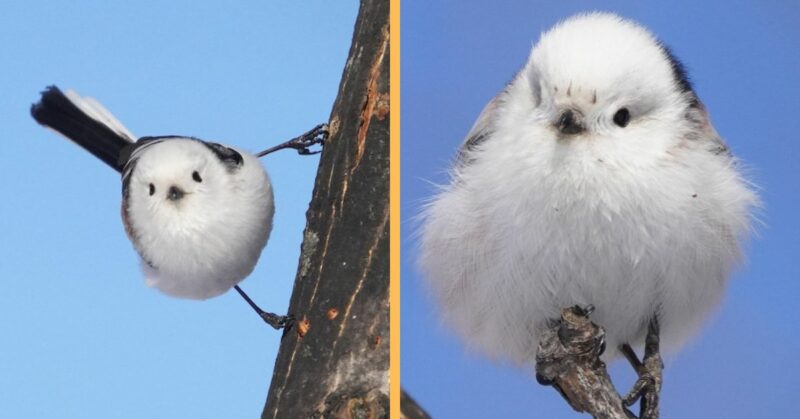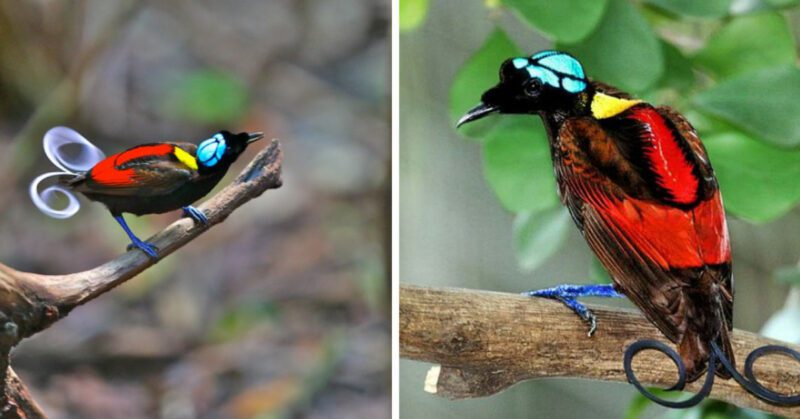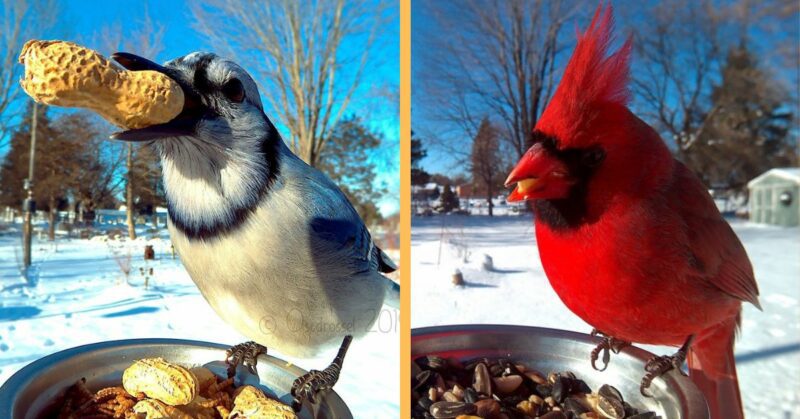

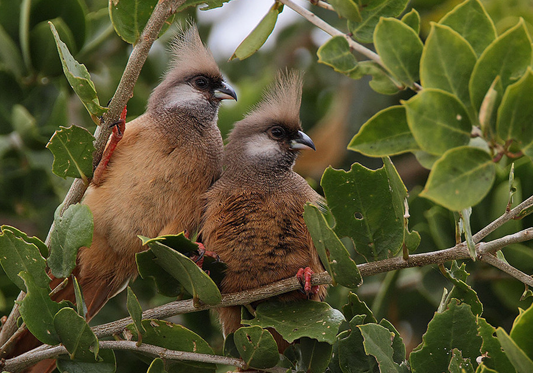
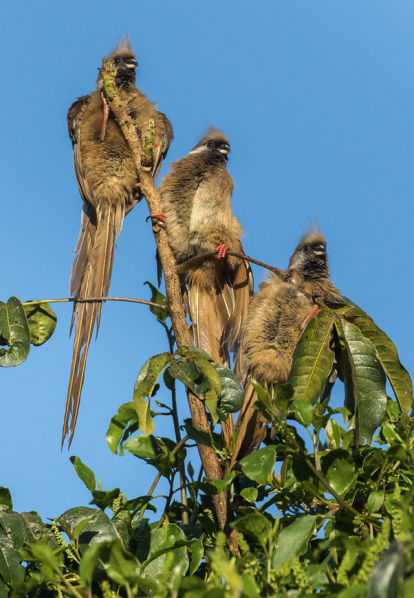
Mousebirds (or perhaps they should be called “mouse-like birds”?) get their name because they resemble mice. They are small, with soft, gray plumage, have long tails, and often scurry among the branches and on the ground. So, at first glance, they might look a bit like rodents. But they are birds, so don’t insult them!

Long-tailed birds belong to an ancient lineage of birds; in the past, they were widespread, but today only six species remain, all living in Africa, with the spotted long-tailed bird being one of the most common. They are gregarious birds that move in small groups of about 20 individuals. They are not always welcome in orchards and gardens, where they wreak havoc by stealing fruit and other things. However, they have the curious habit of hanging upside down after a good meal.
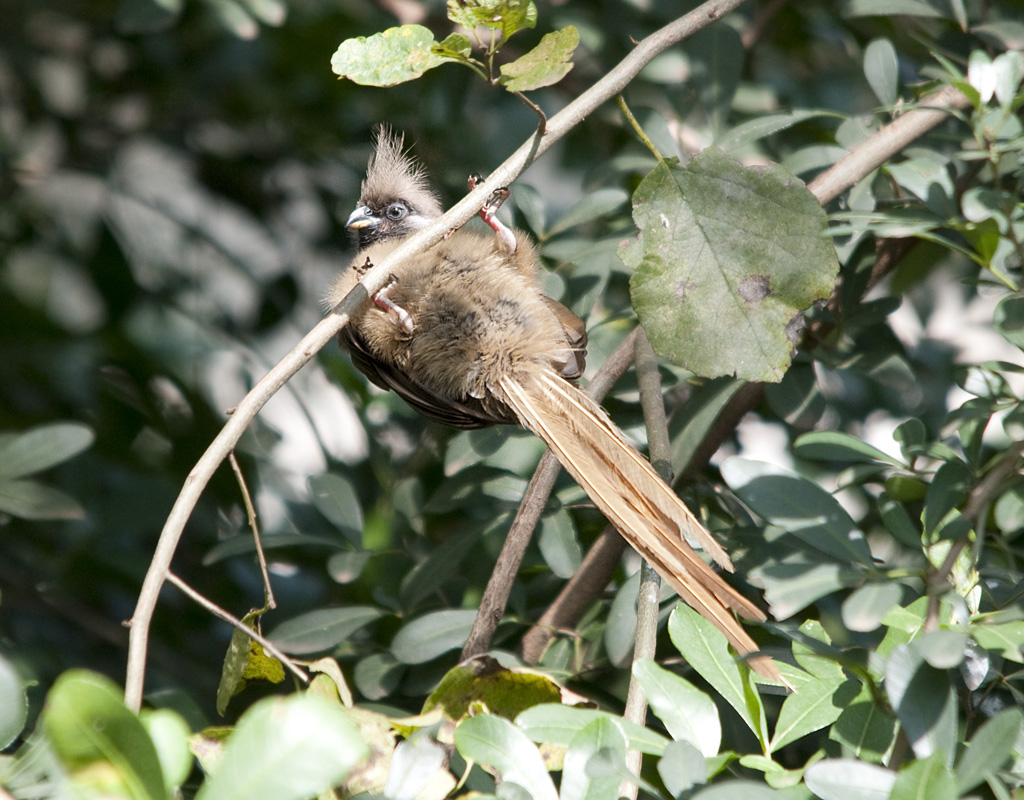
There’s actually a good reason for these peculiarities. Unlike many other birds, firetails eat leaves and other cellulose-rich foods. This type of plant matter is difficult to digest. Animals like sheep and cows manage it thanks to large, complex stomachs and specialized gut bacteria. But birds need to maintain a light weight, so they don’t have room for such a bulky digestive system. However, the spotted firetail has found an ingenious solution. Although it’s difficult to see, the skin on its belly is black. After eating, they expose their stomachs to the sun and take a relaxing sunbath. Their dark skin absorbs the heat, warming their internal organs, which in turn stimulates the gut bacteria to break down the plant matter more efficiently. For firetails, an afternoon nap is a vital part of every meal: it’s the only way their digestive juices can work properly.
I feel like they’ve really got life worked out.
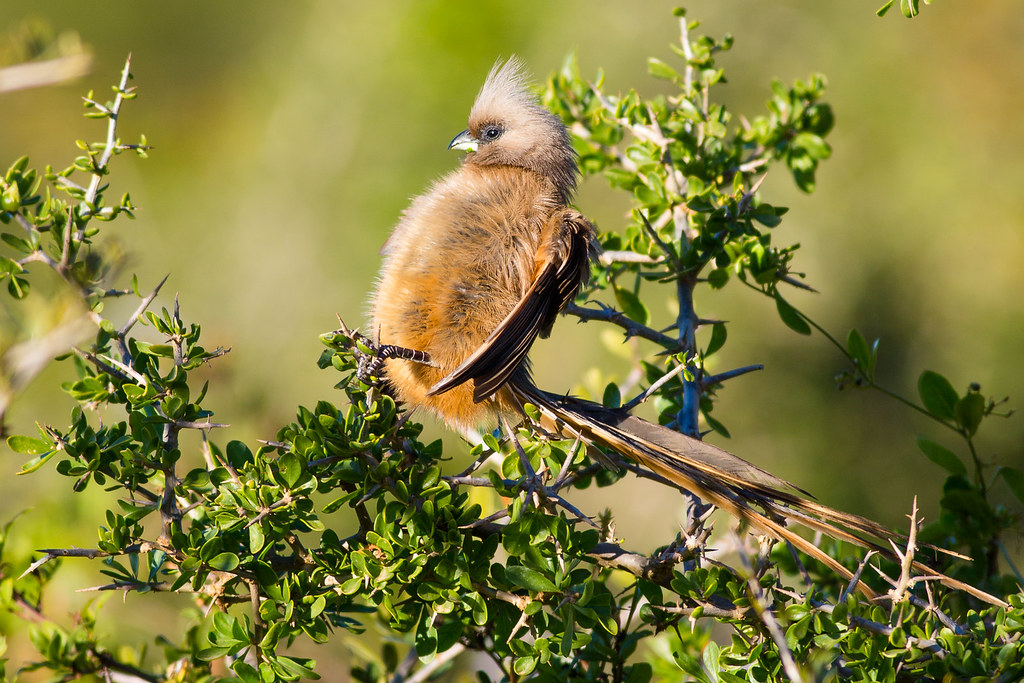
Not only is it a clever little quirk of evolution, but in my opinion, it makes them look rather adorable, albeit silly.
Read More: Meet The Blue-crowned Hanging Parrot